


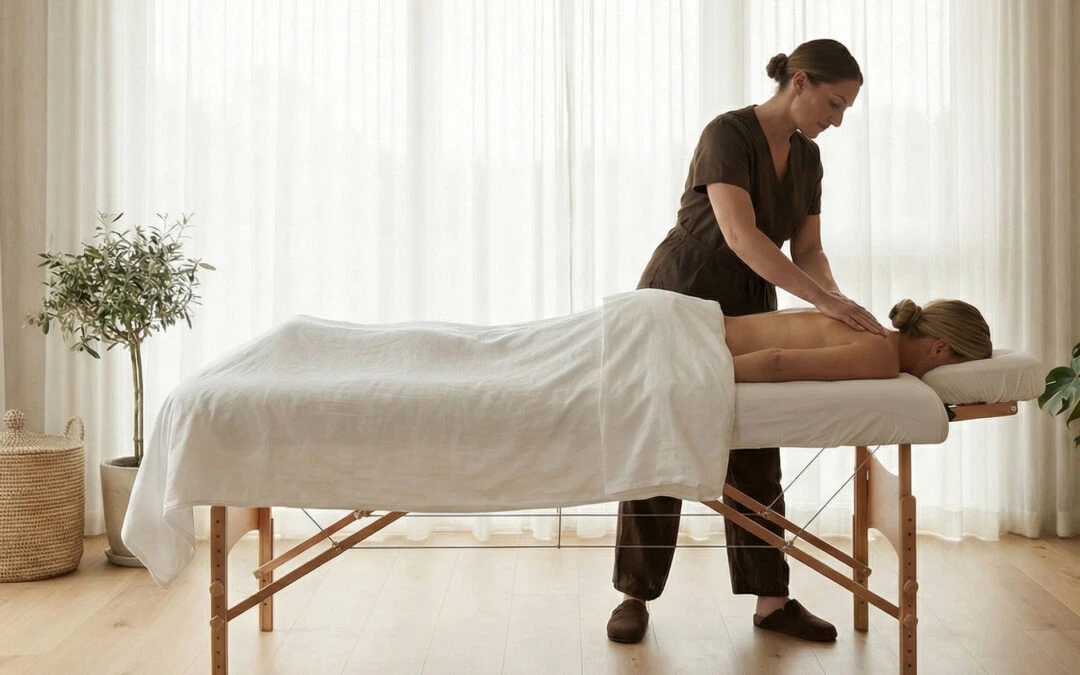
When people describe an in-home massage as “deeper” or “longer-lasting,” the explanation is often reduced to comfort or convenience. Softer lighting. Familiar surroundings. No commute. While those elements may feel pleasant, they are not what actually changes the body’s response. The difference is neurological. Specifically, it is about how the nervous system evaluates safety — and how that evaluation determines whether tissue can truly let go.
Massage does not work in isolation on muscles. It works through the nervous system first. Manual pressure, stretch, and rhythm are interpreted by sensory receptors that report directly to the brain. If the brain remains in a guarded state, tissues resist change. If the brain perceives safety, the same techniques produce a fundamentally different outcome.
1. The Nervous System Decides Before Touch Begins
Before any physical contact occurs, the nervous system is already active in evaluation. It scans the environment for predictability, familiarity, and perceived demand. This process determines whether the body remains in a protective, performance-oriented state or allows a shift toward regulation. Even subtle stressors—such as time awareness, unfamiliar sounds, or the need to orient in a new space—maintain low-level sympathetic activation. This activation sustains muscular readiness and limits how fully tissues can soften, regardless of how skilled or gentle the manual work may be.
In a home environment, this evaluation resolves almost immediately. The brain recognizes known sensory patterns, spatial layouts, and routines, reducing the need for vigilance. Cognitive and sensory load decreases before the session even begins. This early down-regulation establishes a fundamentally different baseline for the body. Massage starts from a state of relative neurological safety, meaning the practitioner is not working against protective tone. Tissue responsiveness improves not because of pressure or technique, but because resistance has already been lowered.
2. Sympathetic Activation Maintains Chronic Tension
Chronic tension is rarely the result of conscious muscle contraction. More often, it is sustained by persistent sympathetic nervous system tone that signals readiness, alertness, and protection. This background activation maintains low-level motor neuron firing and increased fascial stiffness, even when a person subjectively feels relaxed. As a result, muscles may appear tight or unresponsive, and manual techniques produce only temporary changes that quickly rebound once stimulation ends.
Traveling to an appointment reinforces this sympathetic state through navigation, time constraints, environmental novelty, and social interaction. Even mild logistical demands are sufficient to sustain vigilance. In contrast, in-home massage removes these triggers entirely. Sympathetic output decreases earlier and remains suppressed longer. Muscle tone drops without being immediately reinstated afterward. The release that occurs is neurological in origin, not merely mechanical, allowing changes to persist instead of collapsing once the session concludes.
3. Parasympathetic Dominance Requires Continuity
Parasympathetic activation governs recovery-oriented processes such as tissue repair, digestion, immune modulation, and sleep regulation. Unlike the sympathetic response, it does not switch on instantly in response to relaxation cues. It requires consistent, uninterrupted signals of safety over time. Familiar environments provide these signals without requiring conscious effort, decision-making, or sensory adaptation, allowing the nervous system to settle gradually and fully.
During in-home massage, parasympathetic dominance often begins before the practitioner arrives and continues well after the session ends. Breathing patterns slow earlier, heart rate variability improves, and overall systemic tone shifts toward restoration. Because the environment remains unchanged, this state is not disrupted. The physiological effects of massage are allowed to consolidate rather than dissipate. What is gained during the session is carried forward instead of being overwritten by reactivation.
4. Context Changes How Touch Is Interpreted
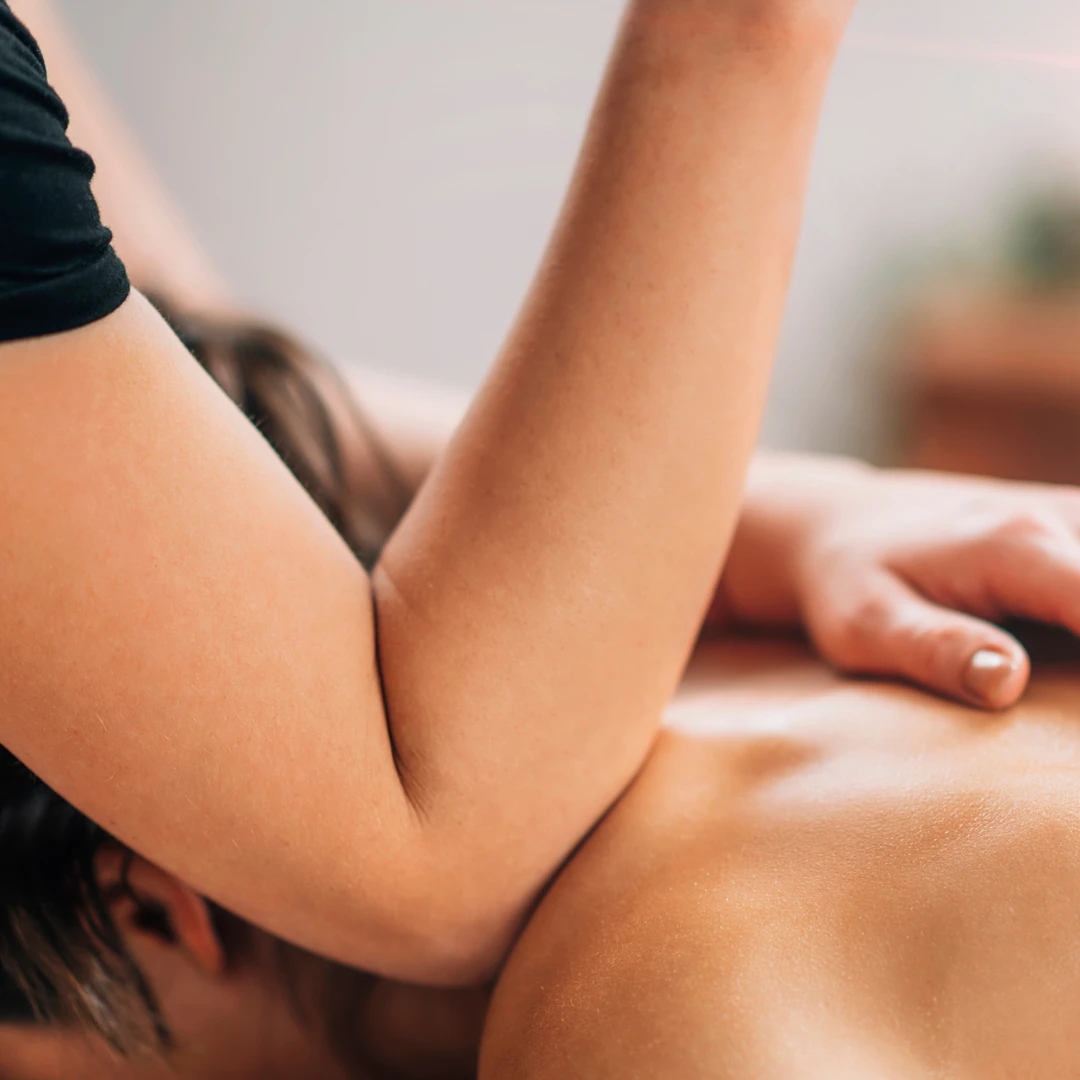
The brain does not interpret touch based solely on pressure, speed, or anatomical intent. All sensory input is filtered through context. In environments that require alertness or adaptation, the same manual input may be interpreted as invasive, corrective, or demanding. This interpretation can trigger reflexive guarding, even when the practitioner’s intent is therapeutic and the pressure is appropriate.
Within a familiar home setting, the nervous system classifies touch differently. Threat assessment is minimal, and nociceptive amplification decreases. Sensation can be perceived without escalation into discomfort or defensive contraction. This allows deeper work to occur with less force and less pain. Tissue response improves not because the practitioner pushes further, but because the brain permits change instead of defending against perceived intrusion.
5. Why the Results Feel Deeper and Last Longer
When people describe in-home massage as feeling “deeper,” they are rarely referring to pressure. They are describing a subjective experience of access—an absence of resistance. Depth is perceived when sensation is not filtered through vigilance, anticipation, or self-monitoring. In these conditions, the nervous system allows sensory input to move through without triggering protective reflexes.
By reducing sympathetic activation before, during, and after treatment, the body exits its habitual defense loop. Muscles stop bracing preemptively. Fascia no longer stabilizes against uncertainty. The nervous system updates its baseline expectations of safety and demand. As a result, tissue changes persist instead of rebounding. What feels like depth is actually integration, and what lasts is the recalibration of neurological tone.
6. In-Home Massage as a Clinical Strategy
In-home massage is not a softer alternative to clinical care, nor is it merely a luxury format. It is a delivery context that optimizes neurological conditions for physiological change. For individuals experiencing chronic tension, stress-mediated pain, sleep disruption, or slow recovery, the environment in which care is delivered directly influences treatment outcomes.
When care aligns with how the nervous system regulates safety and threat, outcomes no longer depend on intensity, pressure, or frequency alone. They depend on regulation. The more consistently safety is present during treatment, the less intervention is required to achieve lasting change. In this framework, regulation becomes the primary mechanism of action, and environment becomes a clinical variable rather than a background detail.
7. Integration Requires Stillness After Touch
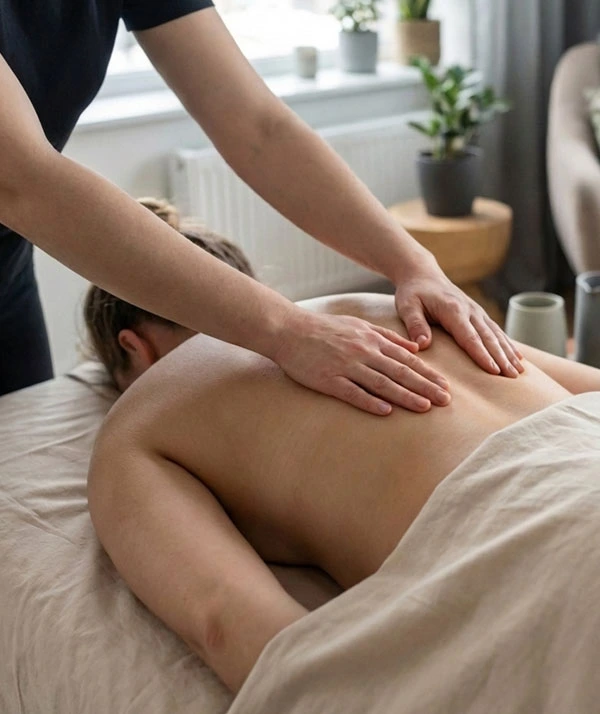
A significant portion of massage benefit occurs after hands leave the body. Circulatory redistribution, neuromuscular recalibration, and autonomic regulation continue during the integration phase. If this phase is interrupted by movement, noise, conversation, or task switching, sympathetic tone is rapidly reactivated, truncating the physiological processes that were initiated during treatment.
In-home massage preserves this integration window. The nervous system remains in the same regulated environment in which the work occurred. There is no abrupt transition, no requirement to reorient, and no immediate cognitive demand. Physiological processes are allowed to complete naturally. Recovery is not forced; it is permitted. This continuity significantly increases the durability of treatment effects.
8. Neuroplasticity Favors Familiar Environments
The nervous system learns through repetition in contexts it deems safe. This principle applies not only to movement patterns but also to stress regulation and muscle tone. When relaxation repeatedly occurs in unfamiliar environments, the brain categorizes it as situational and temporary—an exception rather than a new standard.
When relaxation occurs consistently at home, the brain associates regulation with everyday life. Over time, baseline tone shifts. Muscles return to rest more easily. Stress responses shorten in duration. Sleep patterns stabilize. Through neuroplastic adaptation, temporary relief becomes a durable change. The environment teaches the nervous system what is normal, not just what is possible.
9. Consistency Becomes Possible Without Friction
Long-term regulation depends on consistency, yet many people delay or avoid care because each session requires effort that activates stress before treatment even begins. Scheduling, commuting, and time pressure all introduce friction that undermines the very regulation massage is intended to support.
In-home massage removes this friction entirely. Sessions integrate into daily life without anticipatory stress. Care becomes preventive rather than reactive. When regulation is maintained consistently, tension accumulates more slowly and resolves more efficiently. The nervous system spends less time compensating and more time recovering, reducing the overall need for intervention.
10. Regulation Is the Outcome, Not Indulgence
Viewed through a neurological lens, in-home massage is not about comfort, convenience, or ambience. It is about regulation. Familiar environments reduce sympathetic noise, support parasympathetic dominance, improve tissue receptivity, and allow recovery processes to complete without interruption.
This is why the results feel deeper and last longer. The body is not asked to relax temporarily or perform relaxation. It is allowed to reset its internal reference point. When regulation replaces resistance, massage becomes a process of sustained physiological recalibration rather than an isolated event.
Your peace shouldn’t wait. Your calm shouldn’t commute.
Healing doesn’t always require a getaway.